
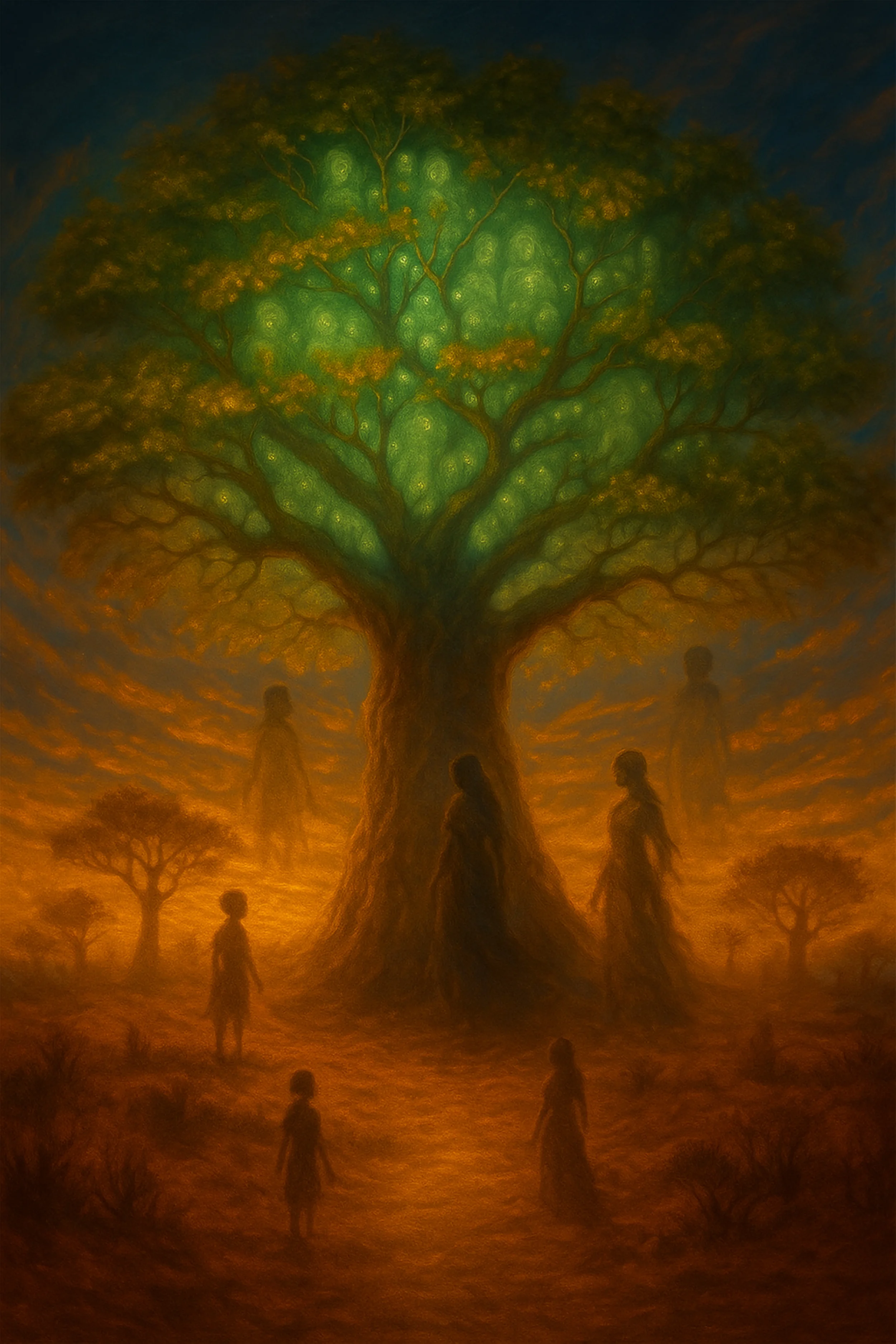
Where the Baobab Whispers
Ancient roots anchor stories untold.
Where the Echo Begins
Grief speaks first. And the silence listens back.
This is a story reborn, carrying the weight of what was and the promise of what will be
Where the Echo Begins is the opening invocation of Where the Baobab Whispers—a gathering place of memory, grief, and generational silence. The stories have not yet taken shape, but the pain is already present. On a beach rimmed in pink sand and whispered names, six women arrive separately and silently, bound not by blood but by the weight they carry.
They do not speak. But their grief does.
This section represents the emotional front matter of the book—the prelude, the epigraph, the warning. It acknowledges what cannot be said all at once. It honors what must be felt before it can be named.
Core Themes
Grief as origin
Silence as presence
The shared ache of unspoken legacy
Companion Reflection Question
What was the first grief you learned to carry in silence—and how did it shape the way you love?
Creative Prompt
Draw or describe a place where silence lives in your memory. What does it look like? What would it say if it could speak?
Beware
Beware the silence you dismiss. It may be where the story begins.

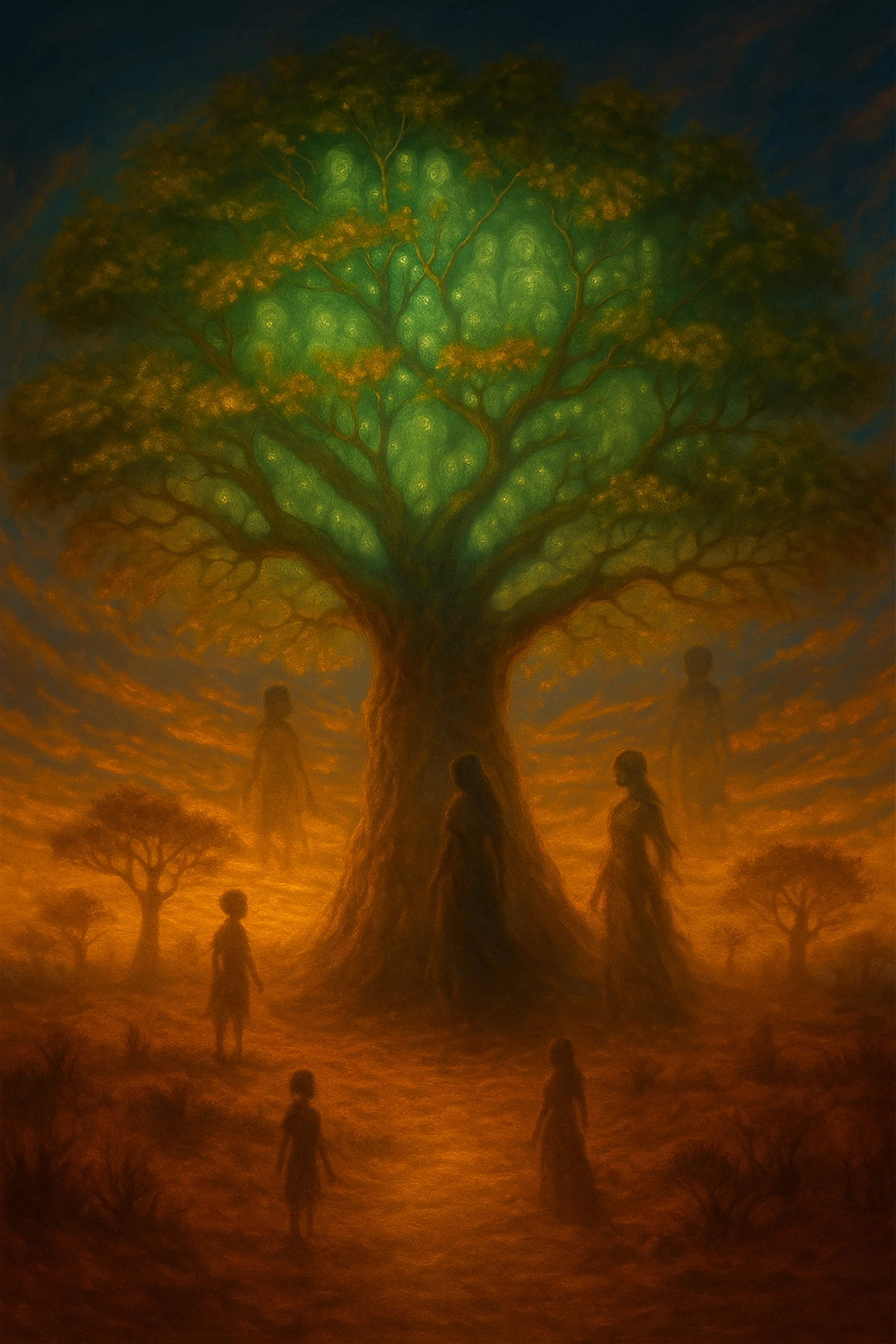
The Weight of the Past
What we bury does not vanish—it shapes the way we walk.
Grief does not disappear. It folds itself into our memories, into our names, into the way we move through the world.
The Weight of the Past is not only the first story in Where the Baobab Whispers—it is the thread that runs through them all.
This section introduces the voices that carry silence like inheritance. It opens with Maisha’s moonlit bargain, a mythic confrontation between forgetting and remembering. It continues with Abeni’s struggle to be seen, and Bahati’s reckoning with the daughter she could not love aloud. It is about mothers and daughters, lineage and shame, tenderness and distance. It is about the ache that is passed down—not through blood alone, but through what is withheld.
The featured Unisex Hoodie: The Weight of the Past holds this tension in image and thread. The profile of a sorrow-marked elder blends with the bowed head of a younger woman—generations tethered not only by pain, but by the quiet endurance it demands.
This is not a garment. It is a reckoning wrapped in warmth. It says: I carry what came before me—and I’m still standing.
Core Themes
Inherited silence
Grief as lineage
The invisible weight of memory
Companion Reflection Question
What part of your past walks beside you—and what would it take to walk differently?
Creative Prompt
Write a letter to an ancestor, known or unknown. Tell them what you’ve kept. Tell them what you’re ready to release.
Beware
Beware the belief that time erases all wounds. Some wounds teach us how to walk.

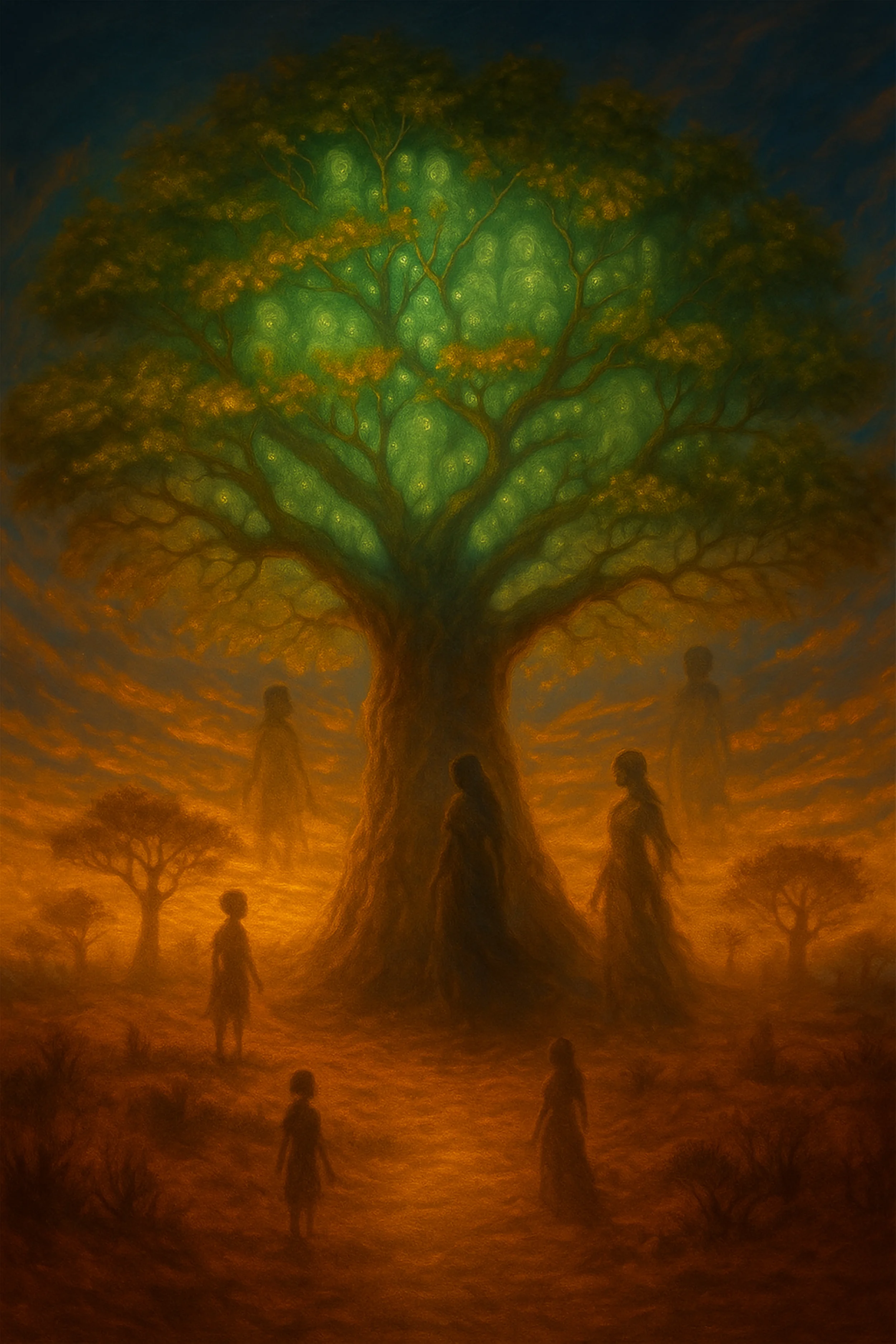
Inherited Skins
Some truths are worn. Others are hidden beneath what we’re told to be.
We do not begin with blank slates. We begin wrapped in layers—skin, name, tradition, silence.
Inherited Skins explores what it means to be shaped by what came before: the expectations we carry, the shame we refuse, and the truths we slowly learn to claim.
This section unfolds through myth and memory, through women like Salima, whose golden skin reveals a truth too radiant for her world to accept, and through Bahati, who must reckon with the legacy of her own mother’s silence to understand how she’s passed that silence on.
The featured Unisex Hoodie: Inherited Skins — Rooted in Legacy captures the quiet power of self-recognition. Eyes closed. Adorned in tradition. Centered in reflection. It is a meditation in motion, a wearable homage to the beauty and burden of identity.
To wear this piece is to remember: not all skin is just surface. Some is story.
Core Themes
Identity passed through generations
Cultural truth vs. personal truth
The tension between visibility and protection
Companion Reflection Question
What part of you was inherited—and what part are you still learning to own?
Creative Prompt
Write a monologue or draw a portrait of yourself shedding an old identity. What remains beneath? What do you choose to keep?
Beware
Beware the names you are given without question. Some do not fit—but they cling like skin until you find your own.

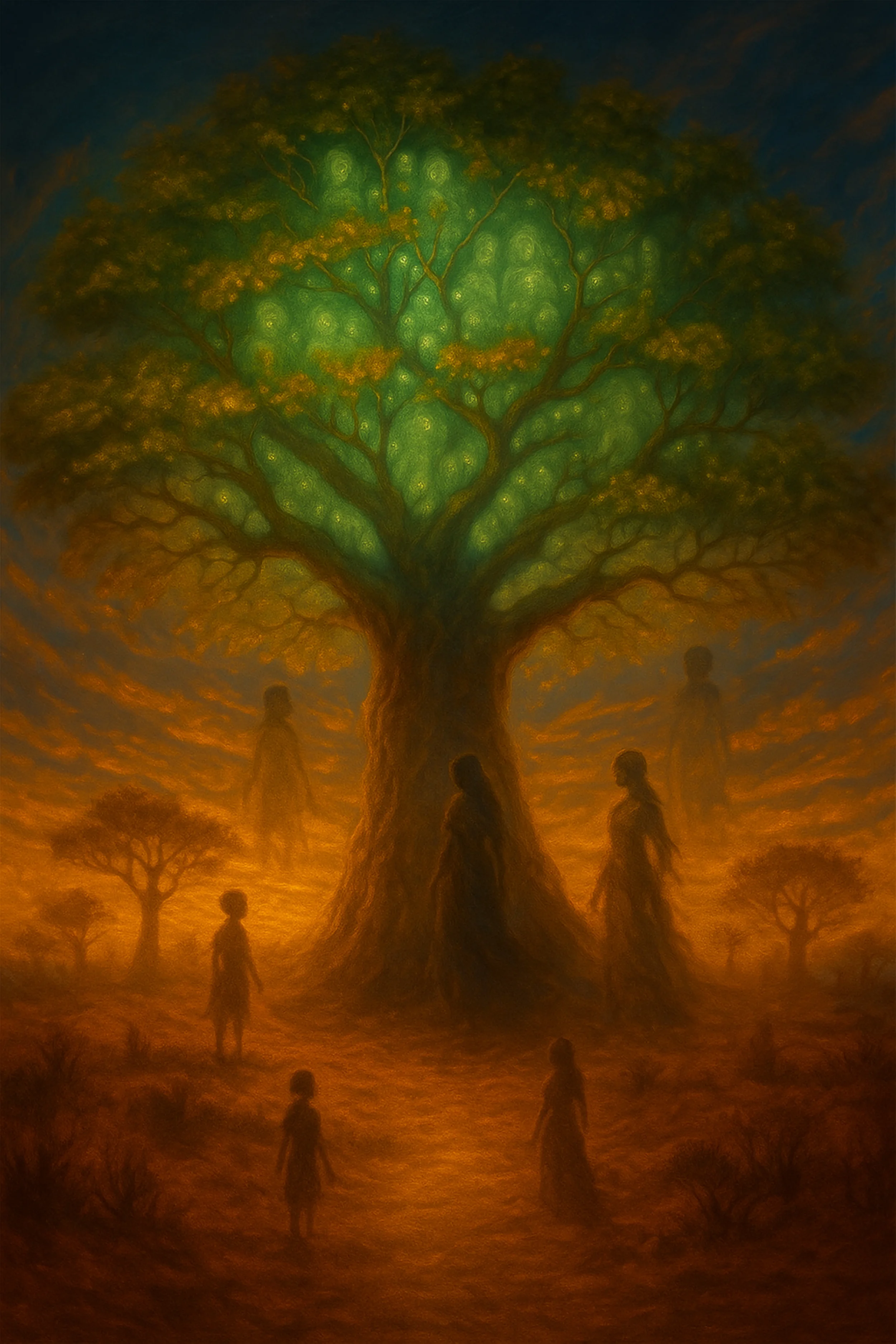
Cravings and Consequences
What we reach for reveals what we’ve been denied.
Desire is not always about excess. Sometimes it is a reflection of absence—what we were never given, what we were told not to want, what we were made to feel ashamed for needing.
Cravings and Consequences explores the hunger beneath the surface: emotional, spiritual, ancestral. And the cost of feeding it too late.
This section centers on women whose appetites have been misunderstood—Mbali, whose fullness masked a deeper emptiness, and Chipo, who tried to drown her pain in the bottle only to find it rising again in her daughter’s eyes. Here, indulgence becomes both sanctuary and threat. Here, want becomes witness.
The featured Unisex Hoodie: Cravings and Consequences Edition presents this tension in haunting form. A figure grips an ear of corn—mouth closed, eyes uncertain—as a skeletal hand hovers, a silent warning at her shoulder. The craving is not only for food—it is for recognition, healing, restoration. But not all hungers can be safely fed.
This is not about shame. It is about naming the ache and daring to ask: Who taught me to hunger this way?
Core Themes
Desire and deprivation
Generational coping and consumption
The emotional cost of what we crave
Companion Reflection Question
What is one thing you have longed for that you were taught to feel guilty about—and what truth lives inside that longing?
Creative Prompt
Write a letter to a version of yourself who reached for something and paid the price. Offer her grace. Offer her context. Offer her truth.
Beware
Beware the voice that shames your hunger. Some cravings come from places that still need tending.

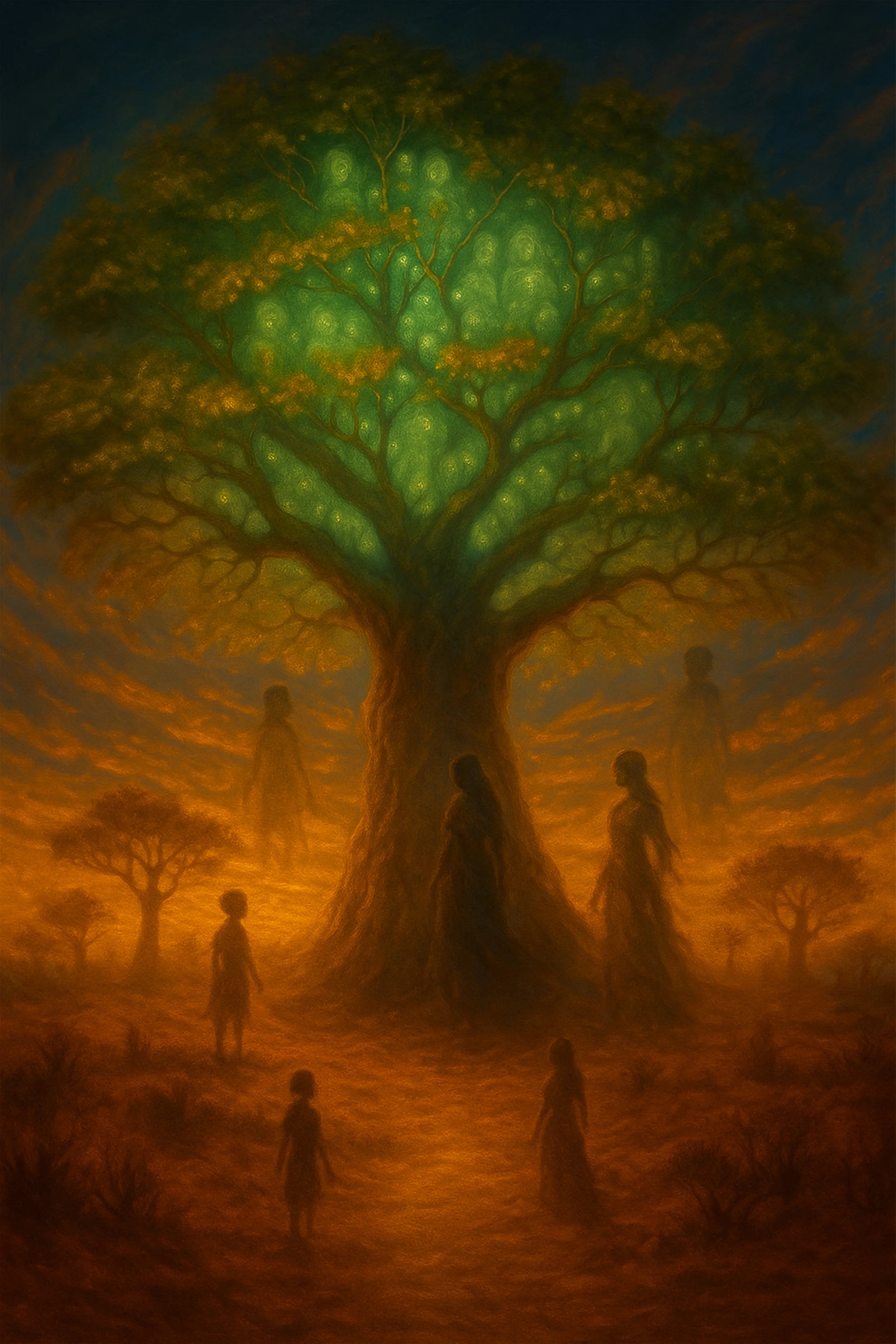
Buried But Breathing
Even in silence, something fights to rise.
Some truths are pressed so deep they forget their own names—but they do not die.
Buried But Breathing is a tribute to the resilience that lives beneath the weight of memory. It is the story of what endures when everything else has been stripped away.
This section holds the quiet defiance of women like Adanne, who clawed her way out of mythic judgment, and Dalila, whose grief had no grave yet grew roots in her chest. Here, survival is not clean. It is jagged, slow, often unseen. But it is real. And it moves—through silence, through soil, through story.
Core Themes
Survival without spectacle
Hidden strength
Grief as fertile ground for renewal
Companion Reflection Question
What part of you has kept breathing quietly beneath what was never spoken?
Creative Prompt
Create a layered piece—an artwork, a poem, or a letter—with something hidden beneath the surface. Let the buried truth rise slowly as the piece unfolds.
Beware
Beware assuming what is unseen is gone. Some stories grow in silence—waiting for light.

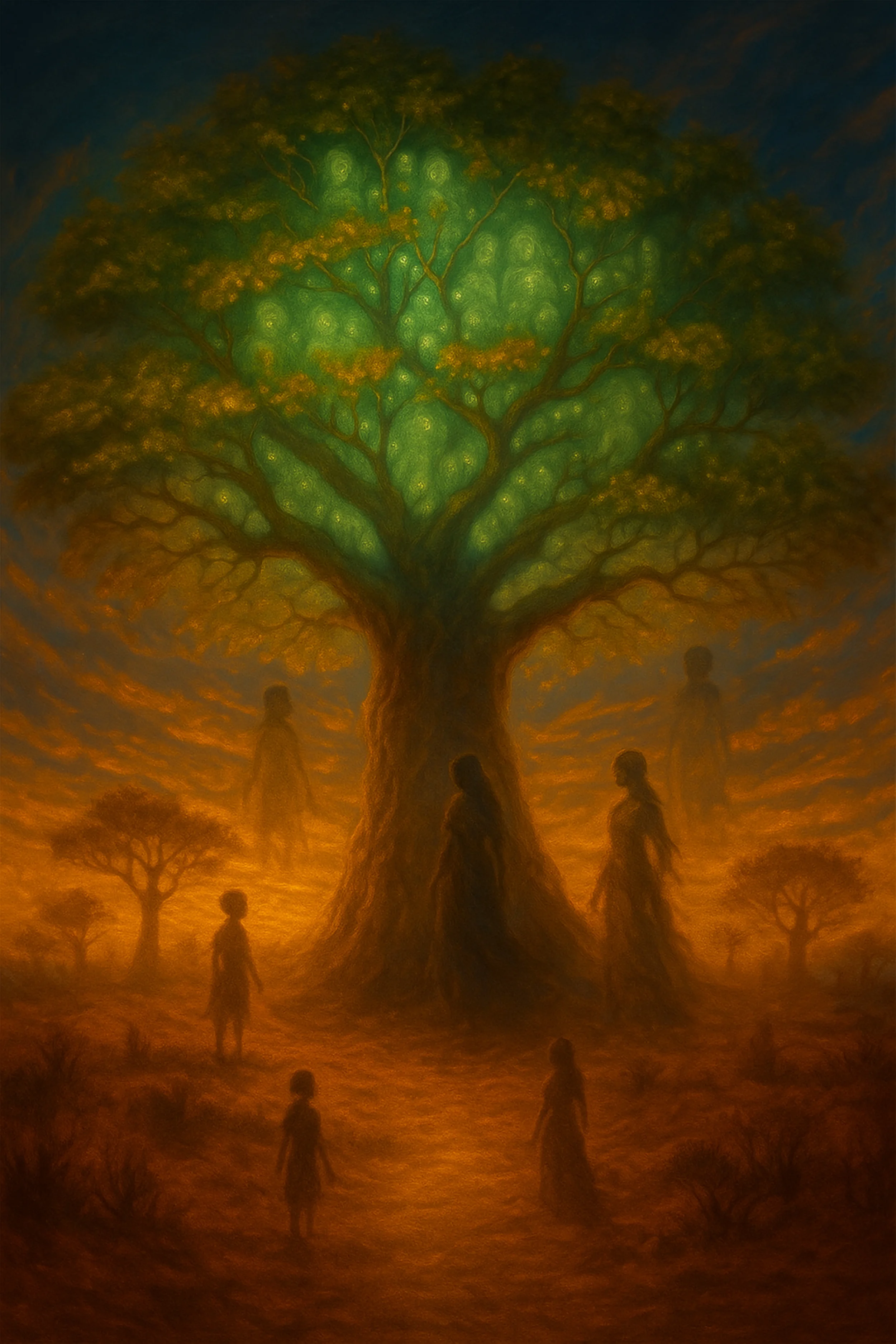
Trials of Grace
Not all battles are loud. Some are survived with stillness.
Grace is not weakness. It is strength that does not shout. It is endurance without applause.
Trials of Grace honors the quiet fight—the long road of holding a family together, of carrying what no one sees, of standing tall when the weight was meant to break you.
This section centers women like Nia, whose power lives not in defiance but in consistency. Women who have carried clay pots and family names with equal care. Who have stood between harm and hope with nothing but their will and weathered hands. These stories do not seek pity. They demand respect.
Core Themes
Steadfastness in hardship
The unseen labor of women
Grace as a form of resistance
Companion Reflection Question
Who showed you how to endure with grace—and what did it cost them to do so?
Creative Prompt
Write a list of things you have carried quietly. Choose one and write a poem or letter from its perspective.
Beware
Beware mistaking quiet for ease. Some storms are endured in silence.

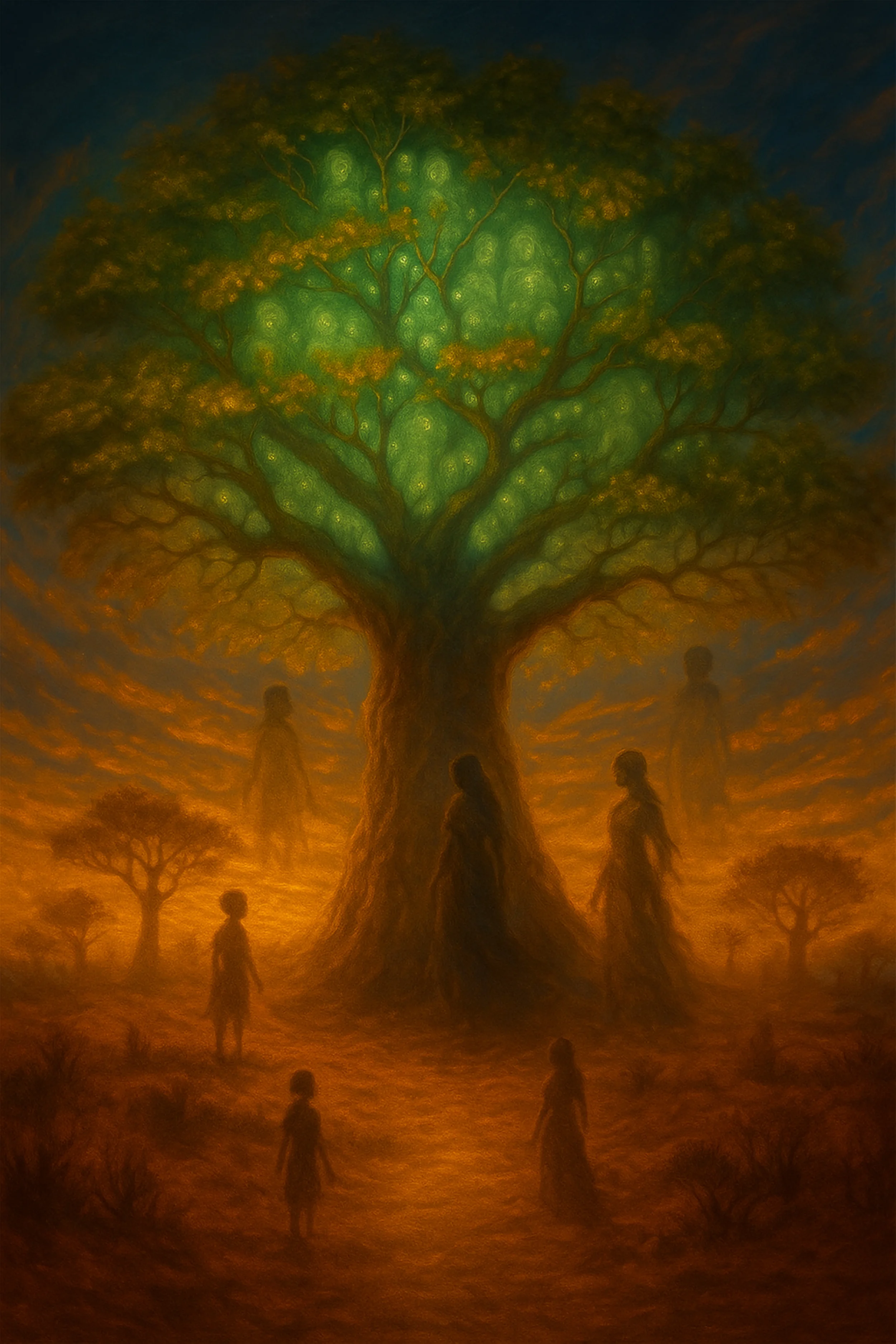
Unspoken Origins
Some stories begin before the first word is ever said.
Not all beginnings are written. Some live in gesture, in gaze, in the hush between generations.
Unspoken Origins explores the lineages passed down in silence—the truths we carry without knowing, the names whispered only in dreams, the histories buried not by time but by fear.
This section centers the characters who navigate fractured beginnings—Ayo, who inherits a shadow with no source, and Mirembe, who pieces together her past through symbols carved in memory more than language. These are not tales of loss alone. They are stories of reclamation, where roots once hidden begin to reach for light.
Core Themes
Lineage hidden in silence
Searching for ancestral connection
Identity beyond what is spoken
Companion Reflection Question
What part of your story began before you were ever told it?
Creative Prompt
Sketch a family tree—but instead of names, fill each branch with a feeling, memory, or unanswered question. Where do your roots reach that your voice has yet to follow?
Beware
Beware mistaking silence for absence. Some truths are simply waiting to be remembered.

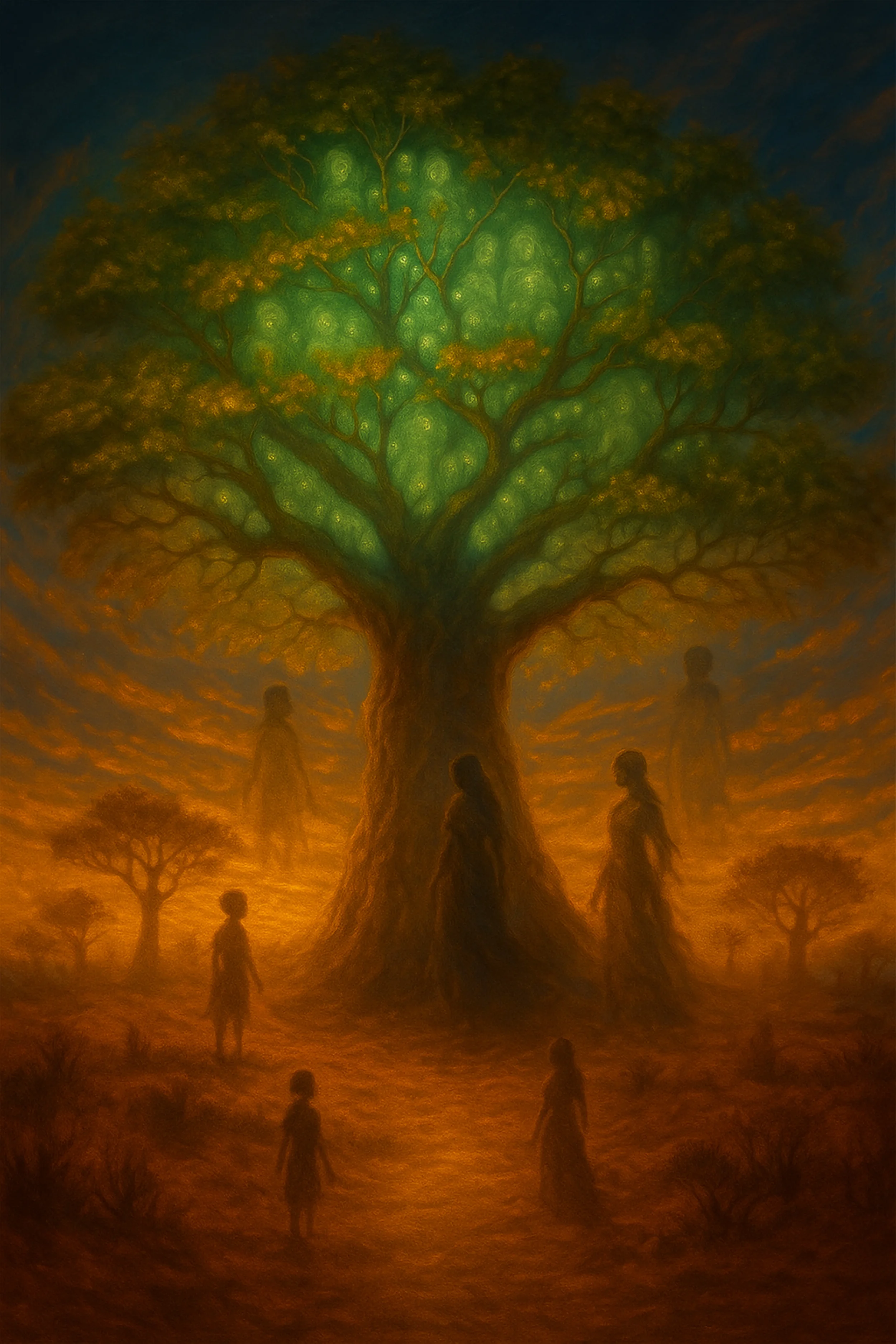
Storm Wisdom
The storm does not only break—it names.
Storms are not always destruction. Sometimes, they are revelation. The thunder that startles you awake. The lightning that shows you what was always there.
Storm Wisdom speaks to the fierce grace of our elders—those who have weathered storms not to survive, but to name truth, protect legacy, and stir what needs to rise.
This section honors characters like Baba Jali and Mama Selene, whose wisdom does not come gently. Their voices crack the silence. Their presence shifts the atmosphere. They are not afraid to call things by their names—even when that name is pain. Even when that name is power.
Core Themes
Elder wisdom and ancestral power
Storms as agents of change
Truth-telling and naming as liberation
Companion Reflection Question
What storm shaped you—and what did it teach you to name?
Creative Prompt
Write a dialogue between you and an ancestor in the middle of a thunderstorm. What do they reveal that silence never could?
Beware
Beware the quiet before the storm. It often means something powerful is about to be spoken.

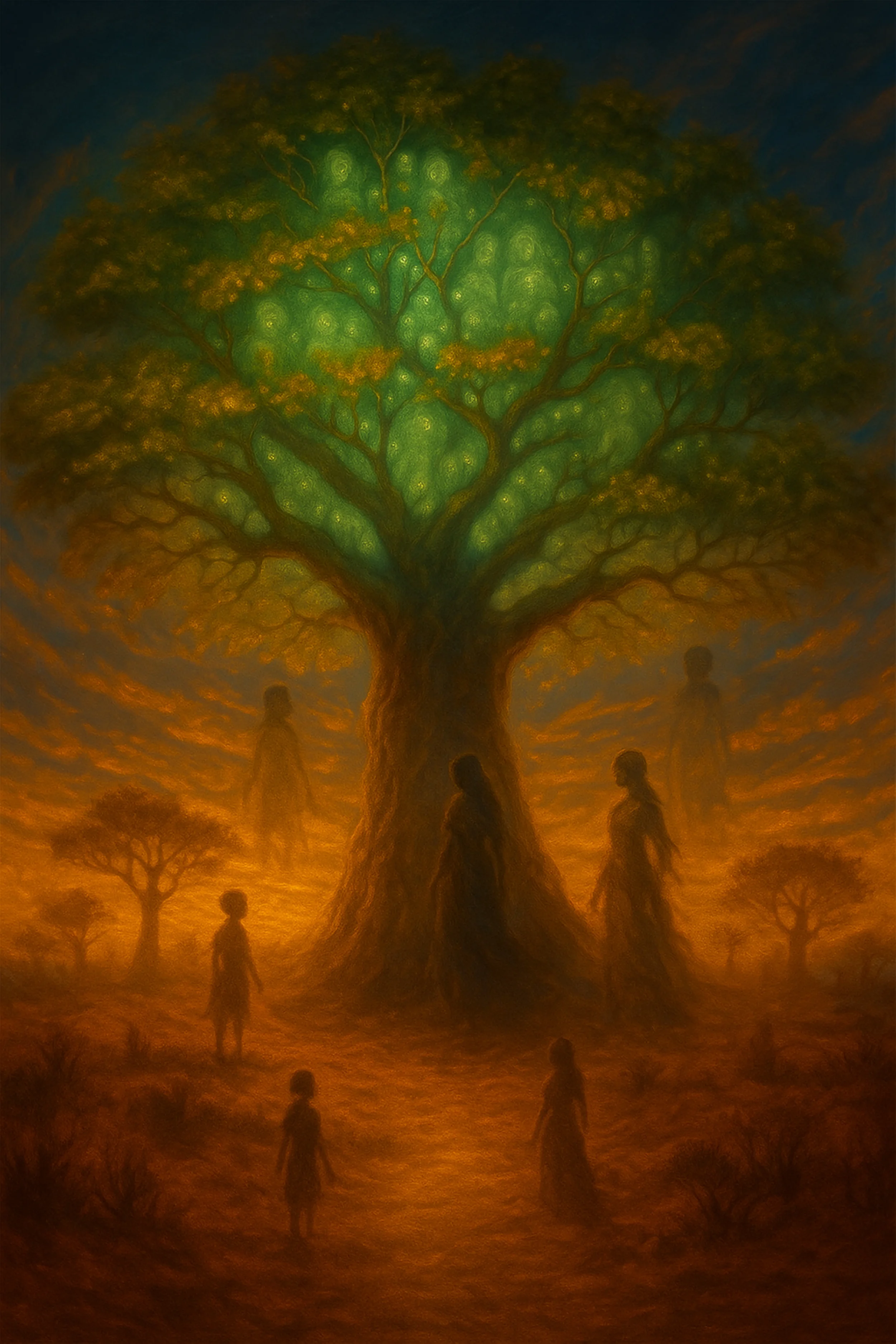
Speak and Burn
To tell the truth is to risk the flame. But silence has its own cost.
There are truths that simmer under the skin—unspoken, inherited, and sharp. When they rise, they do not ask for permission. They demand release.
Speak and Burn is a reckoning with the fire of truth: how it scorches the tongue, clears the path, and sears through everything that pretends to be whole.
This section stands with the voices who dare to name the unspeakable. The ones who understand that silence can preserve comfort, but only truth can set anything free. Whether it is a truth about pain, about identity, about history, or about love—speaking it changes things. Speaking it costs something. But not speaking it? That burns deeper still.
Core Themes
Truth-telling and its consequences
Voice as resistance
The fire of honesty and the toll of silence
Companion Reflection Question
What truth have you been holding in your mouth, and what would happen if you let it rise?
Creative Prompt
Write a monologue from the perspective of a character who speaks a long-buried truth aloud for the first time. What ignites—and what is left standing?
Beware
Beware the comfort of silence. It often hides the scream that could have saved you.

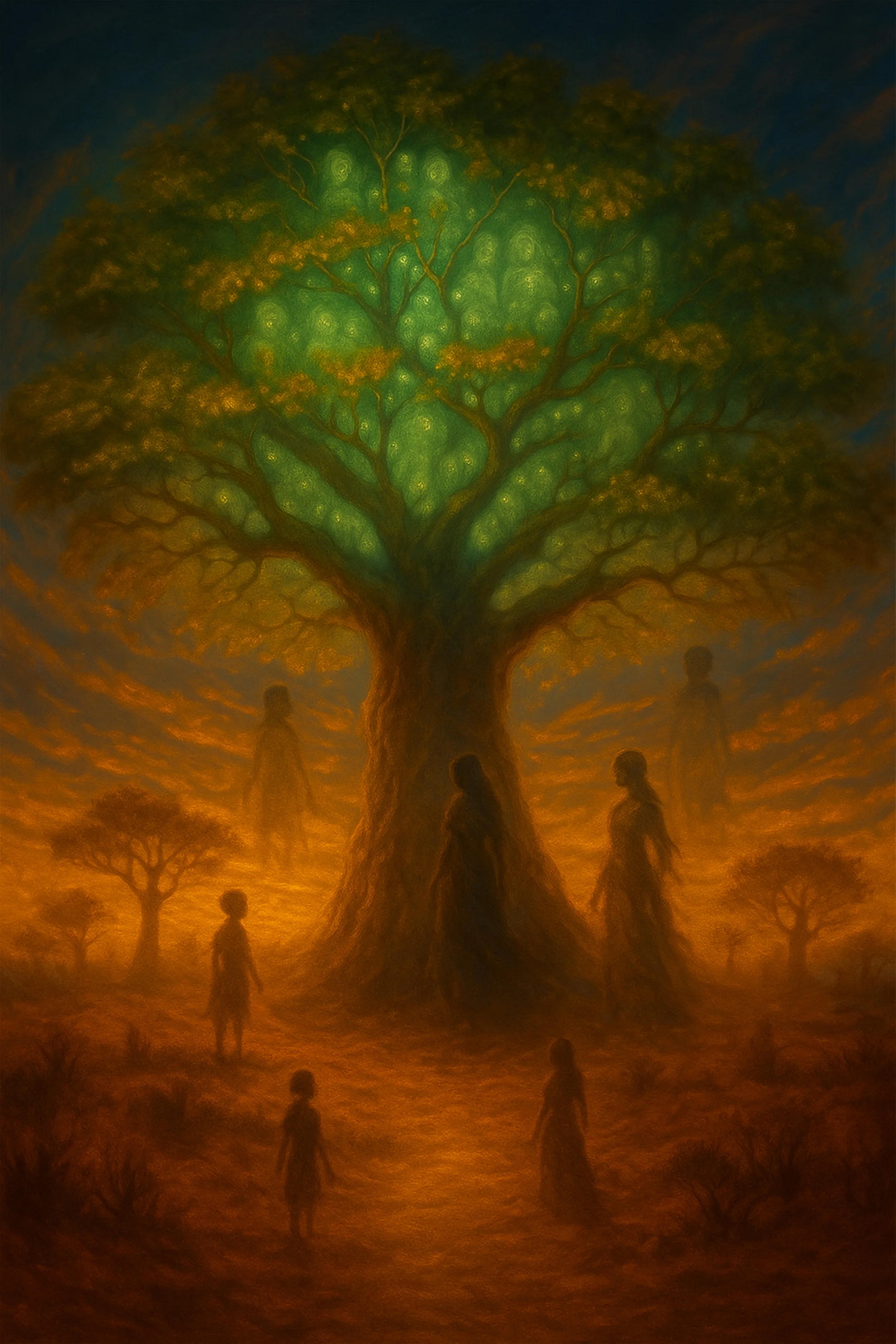
Theft of Joy
Some lights are taken before they dim. And still—they glow.
Loss leaves its mark long before we find the words.
Theft of Joy is a quiet reckoning with grief—the kind we are often forced to carry in silence. It honors those whose brilliance was stolen, whose presence was dimmed too soon, and whose light still lingers in the spaces they once filled. This piece remembers the beauty that bloomed anyway, the laughter that echoes even after it fades, and the courage it takes to keep glowing through the ache.
Core Themes:
Grief and remembrance
Stolen joy and unspoken mourning
Endurance in the face of loss
Memory as a form of light
Companion Reflection Question:
What joy have you been forced to grieve in silence? What would it look like to honor it aloud?
Creative Prompt:
Write a letter to someone you lost—whether through death, distance, or silence. Let it be messy, honest, and free. You do not need to send it.
Beware:
Some losses take without warning. Others take with it the right to grieve. Beware the quiet kind.

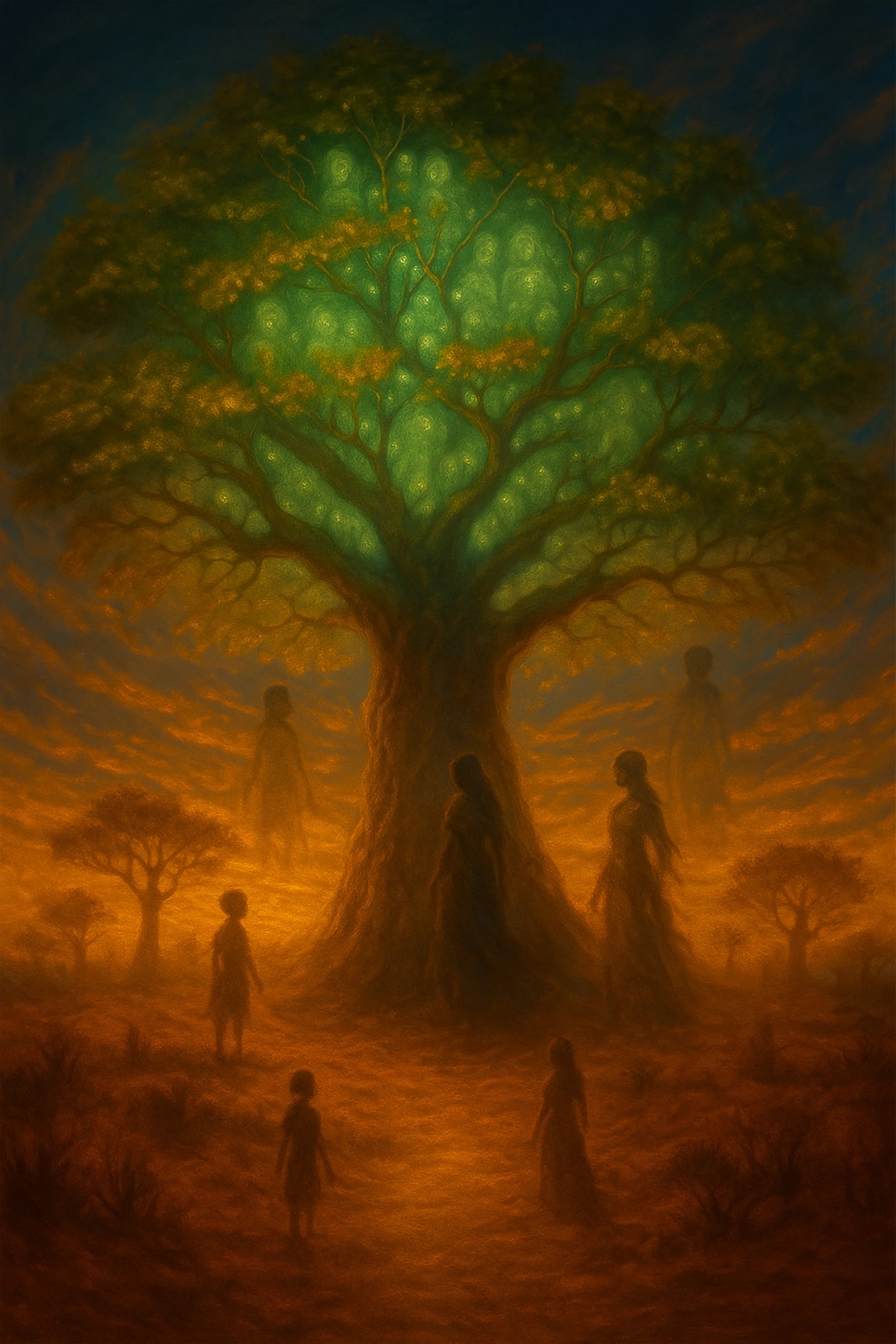
Danger of Listening
Not every whisper seeks your ear. Some seek your undoing.
What we hear is not always what is meant—and some voices wear kindness like a mask.
Danger of Listening explores the power of influence, manipulation, and the weight of inherited warnings. It is a reflection on how words can wound, how silence can shield, and how we must learn to listen with wisdom, not just ears. Sometimes, the most dangerous truths come softly.
Core Themes:
Manipulation and influence
Generational warnings
Emotional and psychological danger
Protecting inner peace
Companion Reflection Question:
Whose voice have you allowed too close? What would it take to reclaim the space it occupies?
Creative Prompt:
Write a scene, poem, or short reflection about a whisper that changed something—either for better or for harm. Focus on the moment it entered.
Beware:
Words can carry balm—or blade. Beware those that smile while they slice.

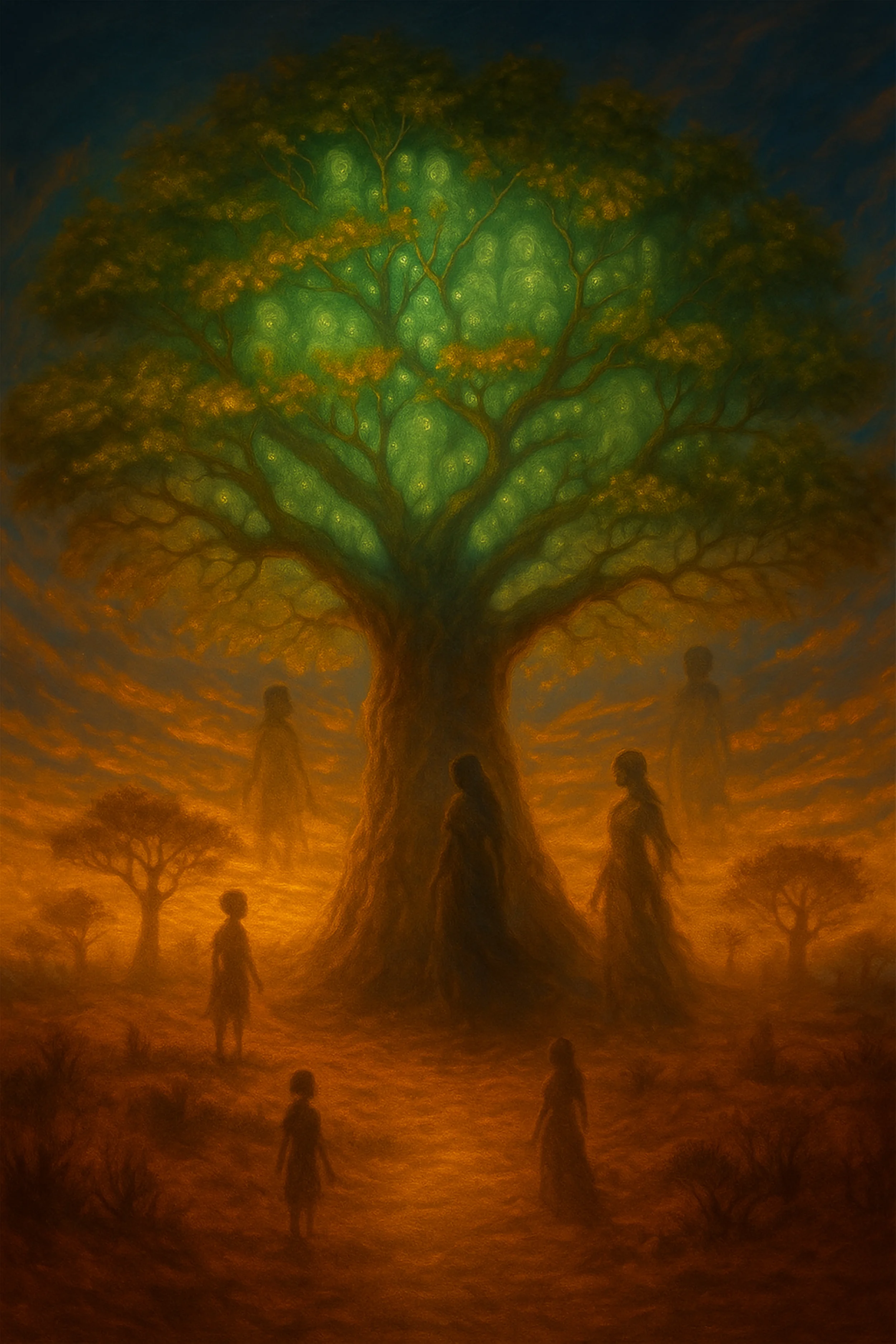
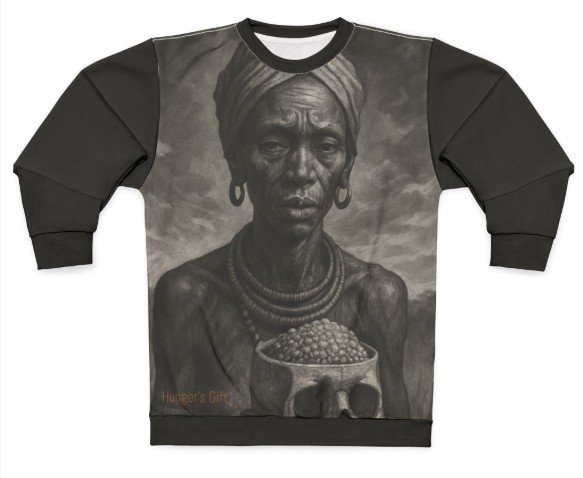
Hunger’s Gift
Desire can devour. But it can also awaken what we forgot we needed.
What we hear is not always what is meant—and some voices wear kindness like a mask.
Danger of Listening explores the power of influence, manipulation, and the weight of inherited warnings. It is a reflection on how words can wound, how silence can shield, and how we must learn to listen with wisdom, not just ears. Sometimes, the most dangerous truths come softly.
Core Themes:
Manipulation and influence
Generational warnings
Emotional and psychological danger
Protecting inner peace
Companion Reflection Question:
Whose voice have you allowed too close? What would it take to reclaim the space it occupies?
Creative Prompt:
Write a scene, poem, or short reflection about a whisper that changed something—either for better or for harm. Focus on the moment it entered.
Beware:
Words can carry balm—or blade. Beware those that smile while they slice.
When the Tide Turns
What was lost does not stay gone. The sea always returns something.
There are stories that rise like waves—relentless, reclaiming. When the Tide Turns captures the moment before reckoning, when silence recedes and voices surge forward. This is not just a return—it is a rising. A memory remade. A strength no longer drowned.
Core Themes:
Reclamation and return
Memory as movement
Feminine power and elemental force
Cycles of loss and resurgence
Companion Reflection Question:
What truth have you reclaimed after it was washed away?
Creative Prompt:
Write a short scene or dialogue where a character confronts something they believed was lost forever—what do they recognize in its return?
Beware:
The tide does not forget. Beware what you cast into the waves. And what comes back to shore.

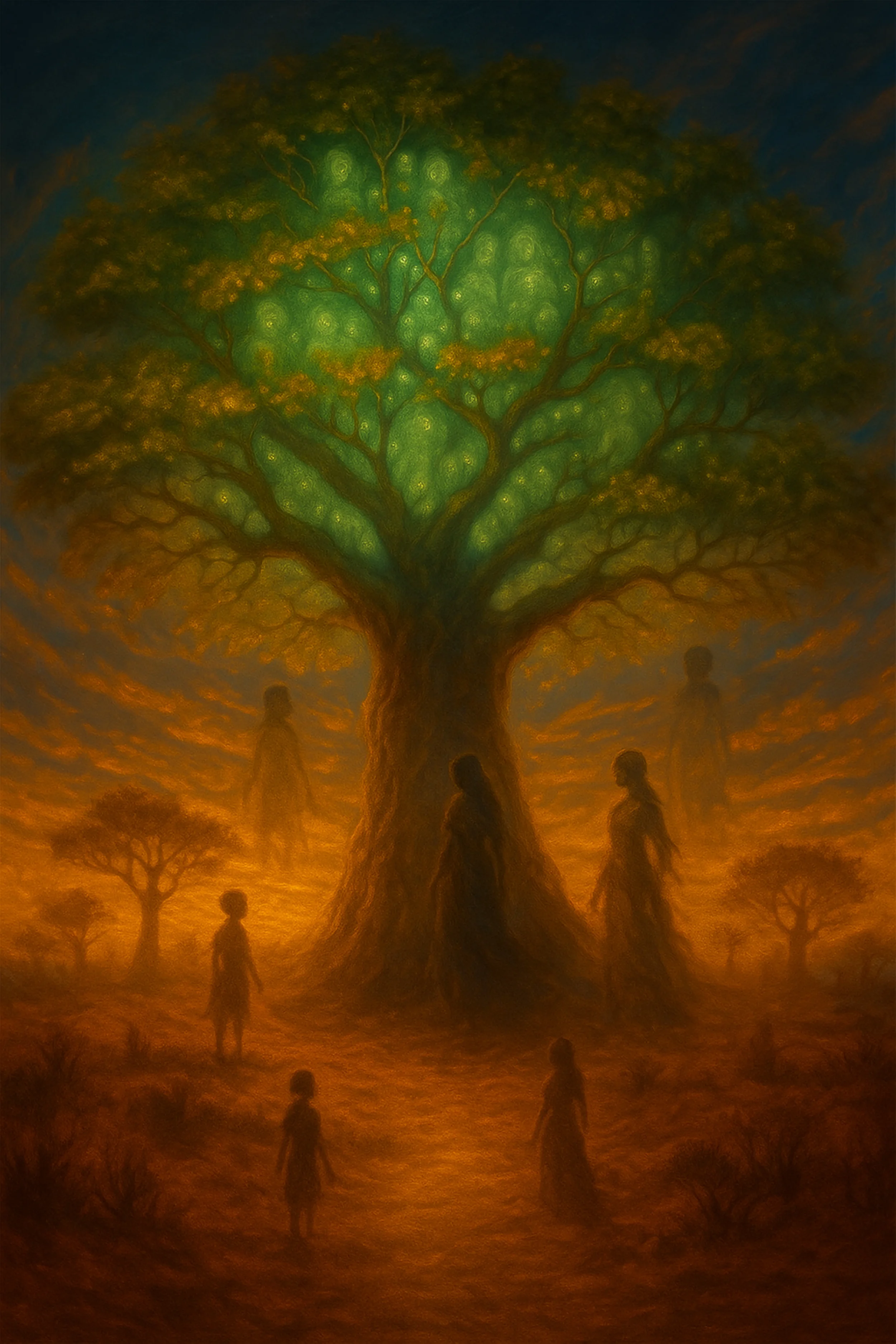
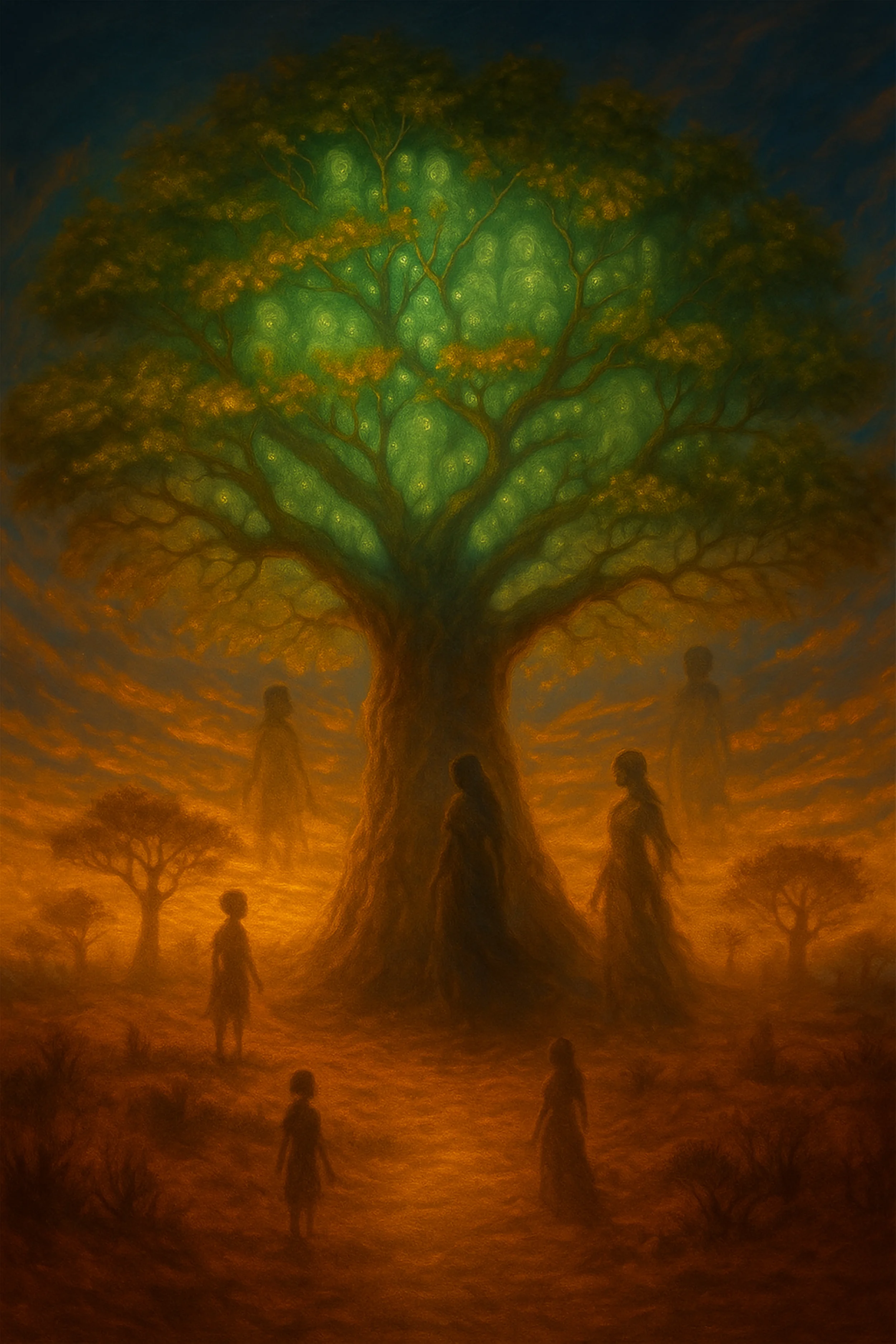
The whisper becomes a voice. The voice becomes a path. And still, the story flows—carried in hearts, rooted in truth, blooming beyond the page. What comes next is not written here... but it lives in you.